Reviewed by: Alfonso Cordova, Sales Automation and Michael Ishlove, Technical Manager
Last reviewed: August 2026
Ask any technician what they expect to find when opening the casing of a failed electric motor, and bearings will usually top the list. It's rarely the winding, the rotor or the frame that gives out first. It's the small, spinning component tucked at each end of the shaft.
For distributors and resellers, that's a problem worth understanding closely. Customers don't always connect a bearing failure back to something preventable. They see downtime, a warranty conversation or a replacement order, not the electrical phenomenon quietly wearing the bearing down from the inside of the electric motor. This piece breaks down what's actually happening, how a simple shaft grounding solution addresses it and how distributors can turn that knowledge into a stronger sales conversation.
Bearing currents form when electrical charge builds up on the motor shaft and discharges through the bearing to reach ground. In motors run on variable frequency drives (VFDs), the fast switching of the drive's transistors creates a common-mode voltage on the shaft and when that voltage has nowhere else to go, the bearing becomes the path of least resistance.
That path comes at a cost. The bearing's lubricating oil film acts like a dielectric and once shaft voltage builds past a threshold, it discharges through that film as a tiny electrical spark. Repeated over thousands of rotations, these micro-discharges pit and flute the bearing race, a failure mode often called electrical discharge machining or EDM.
This isn't a defect specific to one motor brand or one industry. It's a byproduct of how VFDs regulate speed and it shows up anywhere a drive and a motor are paired without a plan for managing shaft voltage.
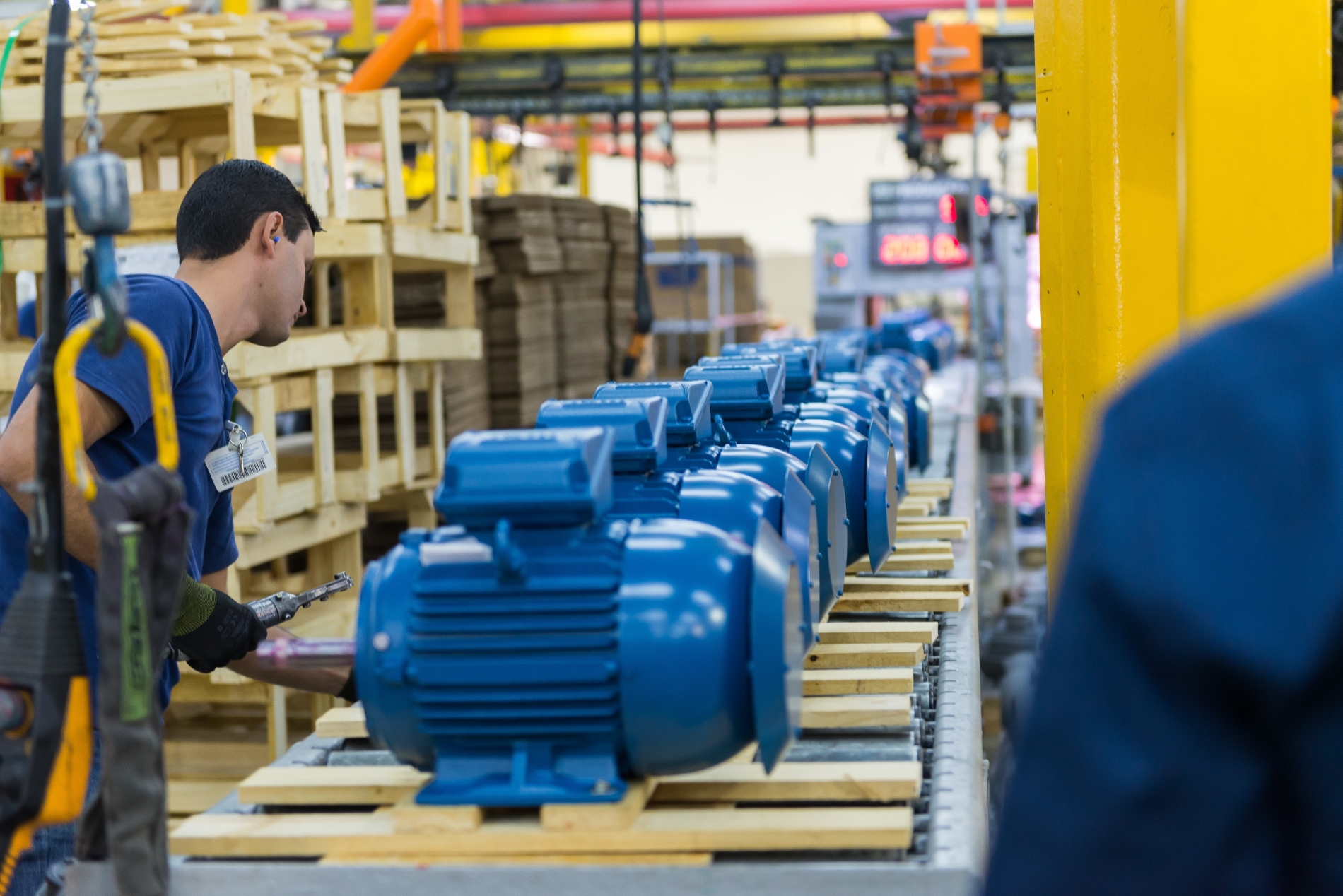
Shaft grounding gives that stray voltage a safer, lower-resistance path to ground, one that bypasses the bearing entirely. Instead of discharging through the oil film and pitting the metal, the current travels through a grounding device built to carry it away harmlessly.
Shaft grounding rings typically use conductive microfibers or brushes in constant contact with the rotating shaft, channeling current to the motor frame and then to ground. Some applications pair this with an insulated bearing on the non-drive end, which raises resistance on that side and forces current to take the grounded path instead of building up across the bearing.
Shaft grounding devices, often combined with proper bonding and insulated non-drive-end bearings, are among the most consistently effective ways to reduce damaging shaft current in VFD-driven motor systems.
Done right, this is a low-cost fix relative to what it prevents: an unplanned motor teardown, a replacement bearing and the labour to get a system back online.
Bearing damage rarely shows up as a sudden failure. It builds quietly and the early signals are easy to miss on a busy production floor. Distributors who train customers to recognize these signs early become the ones customers call before a breakdown, not after.
Watch for unusual motor noise (a grinding or fluting sound rather than a smooth hum), increased vibration readings on routine checks and rising bearing temperature during normal operating conditions. A faint burnt or metallic smell near the motor housing is also worth flagging.
Fluting patterns on the bearing race are a telltale sign of EDM-style bearing current damage specifically, distinct from wear caused by misalignment or contamination. If a customer describes any of these symptoms, shaft voltage is worth ruling in or out early.
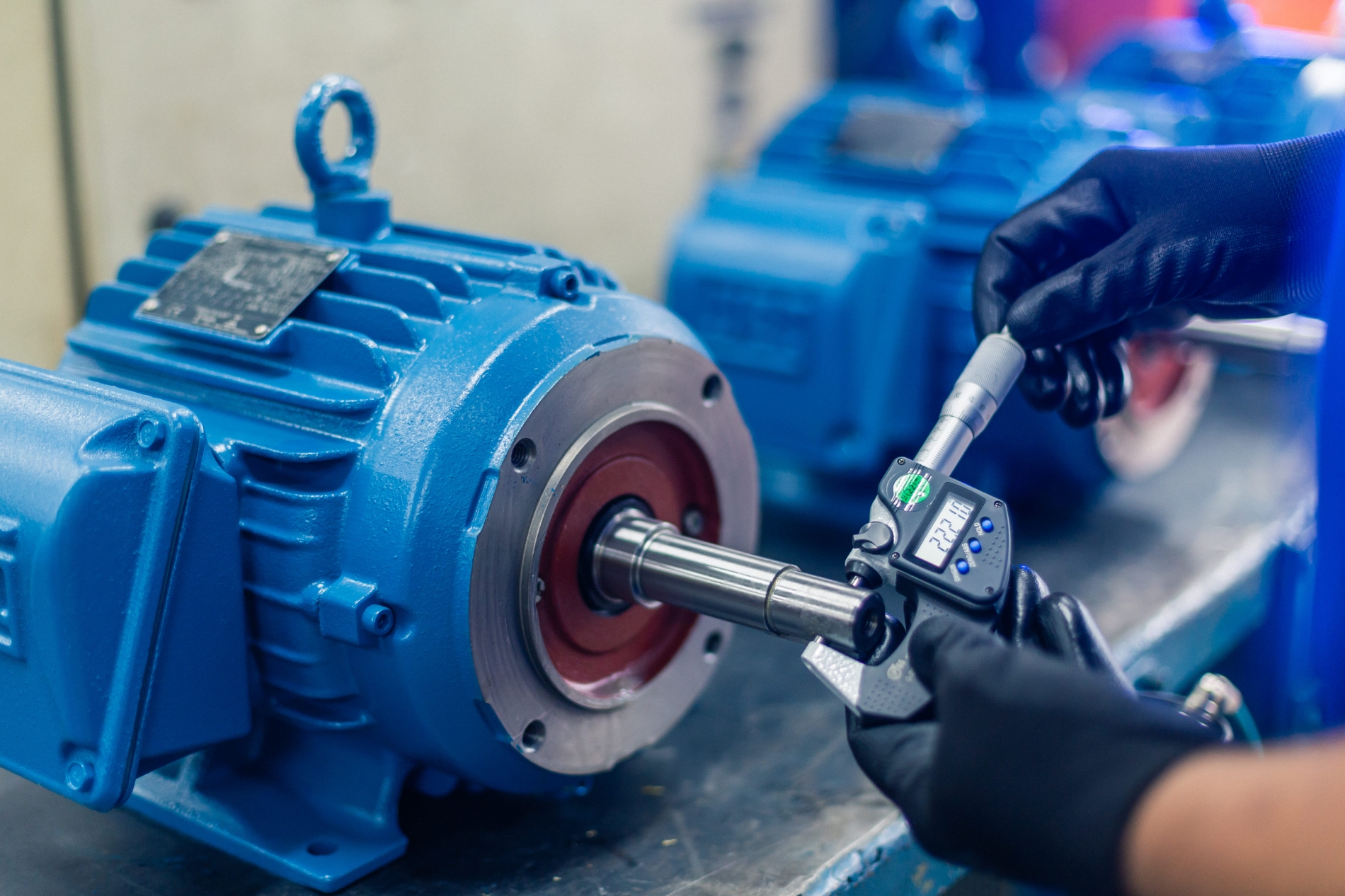
The upsell conversation works best when it starts with the customer's existing pain point, not a generic pitch. A customer replacing a bearing for the second or third time on the same motor is already primed to hear about the root cause. That's the moment to introduce shaft grounding as prevention, not an add-on.
Position shaft grounding alongside the motor and drive quote itself, rather than as an afterthought. When a customer is specifying a new VFD-driven motor, it's a natural point to explain that pairing a drive with a grounding solution protects the investment they're already making. Framing it as protecting uptime and total cost of ownership, rather than adding a line item, tends to land better with buyers focused on budget.
That gap gives distributors a concrete, Canada-specific number to anchor the conversation around protection value.
Plenty of distributors sell motors. But at Pamensky (WEG Canada), we can explain clearly and specifically why a customer's bearings keep failing and what to do about it. That knowledge gap is where distributors can differentiate. Not through price, but through technical credibility.
A distributor who can walk a customer through bearing currents, point out fluting on a failed part and recommend the right grounding solution for that specific application is solving a problem to which competitors are only reacting. That's a harder position to compete against than a quote sheet.
As more industrial systems run on VFDs to gain energy efficiency, the conditions that create bearing currents are becoming more common, not less. Customers need a partner who understands both the motor and the drive system it's paired with, not just one or the other.
That consistency across studies is exactly why this conversation belongs in a distributor's toolkit. Bearing failure isn't a rare edge case. It's the most common failure mode motors face, which makes shaft grounding one of the more practical, high-impact recommendations a distributor can make.
Bearing currents are a well-documented, well-understood problem, but they're still one of the most overlooked conversations in motor sales. Distributors who can explain the cause, spot the warning signs and recommend shaft grounding as a practical fix are giving customers something more valuable than a quote: a reason to trust their expertise on the next order, too.
Ready to add shaft grounding expertise to your product conversations? Contact VJ Pamensky today to explore WEG motor and protection solutions built for Canadian industrial applications.
Reviewed by: Alfonso Cordova, Sales Automation and Michael Ishlove, Technical Manager
Last reviewed: August 2026
A bearing current is an electrical charge that discharges through a motor's bearing on its way to ground, most often caused by common-mode voltage induced by a variable frequency drive.
Shaft grounding is most commonly applied to VFD-driven motors, where induced shaft voltage is the primary concern, though it can also help with other sources of shaft voltage in some applications.
If a motor is driven by a VFD and has experienced repeat bearing failures, unusual noise or fluting on the bearing race, shaft grounding is worth evaluating as a preventive measure.
Yes, shaft grounding devices can typically be retrofitted onto an existing motor without needing to replace the motor itself, depending on the application and shaft access.
Fluting is a washboard-like pattern of small grooves on the bearing race caused by repeated electrical discharge and it's a specific indicator of bearing current damage rather than mechanical wear.
Many customers don't connect repeat bearing failures to shaft voltage, so raising it proactively positions you as a knowledgeable partner rather than just an order-taker.
Shaft grounding is generally a modest cost relative to the price of an unplanned motor teardown, bearing replacement and the associated downtime.
Distributors who understand how motors, drives and protection components interact can recommend the right combination for a customer's specific application rather than selling components in isolation.