Reviewed by: Alfonso Cordova, Sales Automation
Last reviewed: August 2026
Every industrial project eventually hits the same fork in the road: making the right equipment selection so your motor starts smoothly, your budget holds and your system runs the way it was designed to. Get it wrong and you're looking at premature wear, an oversized control panel or a costly retrofit six months into the project.
This guide isn't a feature-by-feature product comparison between a soft starter and a variable frequency drive (VFD). It's a decision framework built around your application, your torque requirements and your budget, so you can walk into your next project meeting with a clear answer instead of a guess. Pamensky (WEG Canada) can guide you in making the right decision.
A soft starter reduces voltage at motor startup and gradually increases it until the electric motor reaches full, fixed operating speed. A VFD, by contrast, varies both frequency and voltage continuously, controlling motor speed and torque for the entire duration of operation, not just the start.
That single distinction with control at startup only versus control throughout the whole operating cycle is the fork in the road for almost every selection decision that follows. If your process needs constant, adjustable speed, a soft starter simply can't deliver it; if it doesn't, a VFD's added complexity may be solving a problem you don't have.
You can save more energy by using a VFD to vary the speed of the motor. This is a direct signal that speed variation, not just startup control, is where VFDs earn their keep.
Your application's speed profile decides this more than any spec sheet. Conveyors, mixers and fans that need to speed up, slow down or adjust output mid-cycle are VFD territory. Pumps, compressors and blowers that run at one constant speed once started are usually better served by a soft starter.
A wastewater pump is the textbook case: constant inflow, constant outflow and a large inrush of current at startup that a soft starter is built to absorb with no ongoing speed adjustment required once it's running.
Conveyors tell the opposite story. A conveyor feeding a variable production line needs to change pace as demand shifts, which only a VFD can do without stopping and restarting the motor.
Quick gut-check for your next project: If the process ever needs to run at anything other than one fixed speed, default to a VFD. If it only ever starts, runs at full speed and stops, a soft starter likely covers it at a lower cost and a smaller footprint.
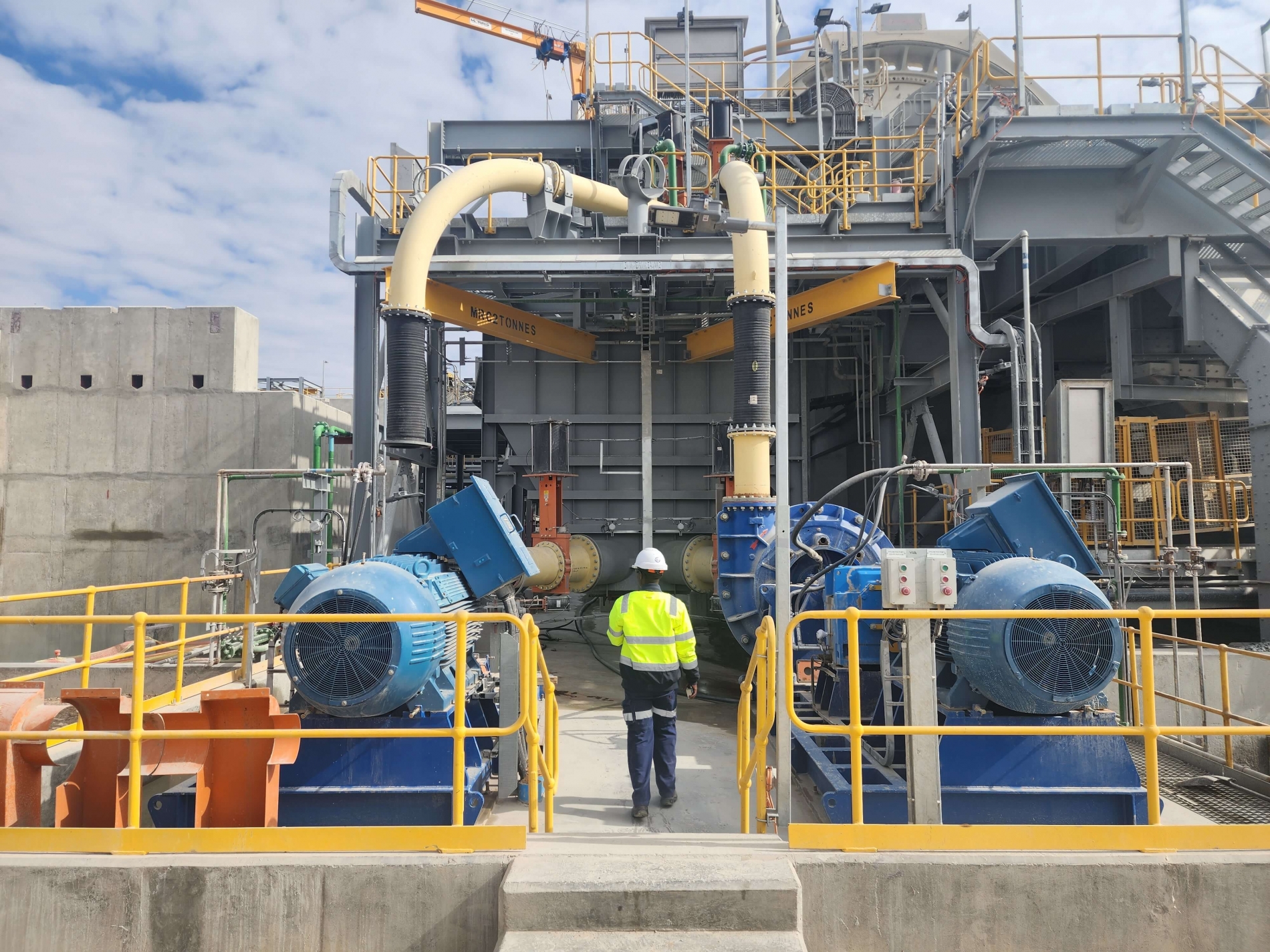
VFDs deliver real energy savings by matching motor speed to actual process demand rather than running flat-out regardless of load. A VFD can provide energy savings of up to 50% over the life of the equipment in variable-load applications. That's a meaningful number for any Project Manager (PM) building a lifecycle cost case.
Soft starters don't offer that ongoing efficiency gain, but they win on simplicity. Fewer components mean fewer configuration points, less training overhead and a shorter commissioning timeline. For teams without dedicated controls expertise on site, that simplicity has real value.
The honest framing for your project brief: choose energy efficiency when your process runs at variable load for meaningful stretches of time. Choose simplicity when your process is fixed-speed and your team wants to minimize configuration risk.
Budget conversations usually start and end with one number: soft starters cost less upfront, full stop. VFDs are at two to three times more than soft starters for comparable horsepower, a gap that matters on multi-motor projects where the difference compounds fast.
However, that gap isn't the whole story. VFDs add diagnostics, protection features and speed control that can lower long-term operating costs even with the higher sticker price. Soft starters, with fewer components, generally mean simpler maintenance and fewer parts to replace over the equipment's life.
Torque requirements often decide this question before cost even enters the conversation. Soft starters modulate voltage rise to produce smooth, gentle acceleration which is a good match for constant-load applications like conveyors, positive-displacement pumps and centrifuges that need to avoid torque surges at startup.
VFDs go further: they offer customizable acceleration and deceleration ramps plus adjustable torque profiles throughout the run cycle, not just at startup.
If your equipment needs one clean torque curve at startup and nothing more, a soft starter is likely sufficient. If torque demands shift while the equipment is running a VFD's continuous torque control becomes the safer spec.
Space and power quality deserve a spot on your project checklist well before install day. VFDs generally require more panel space, additional cooling and shielding to manage higher harmonic content; soft starters typically have a smaller footprint and lower harmonic interference by comparison.
That harmonic difference isn't just a spec-sheet footnote, it affects nearby sensitive equipment, cable runs and long-term motor insulation, particularly on older motors run over long cable distances.
Before you finalize either option, confirm soft starter or VFD compatibility with your existing motor, control system and any connected automation or PLC infrastructure. A mismatch discovered during commissioning costs far more than one caught during specification.
Bring in your automation distributor as soon as your application has more than one variable in play, such as mixed torque loads, tight panel space, harmonic-sensitive equipment nearby or a retrofit onto an existing system. These are the situations where a quick technical review upfront saves a change order later.
Distributors who work directly with WEG soft starters and VFDs day-to-day can also flag pairing opportunities, like VFD and soft starter combinations on multi-motor systems that aren't always obvious from a spec sheet alone.
There's no universal winner between a soft starter and a VFD, only the right fit for your specific application. Start with your speed profile: fixed-speed points toward a soft starter, variable-speed points toward a VFD. Layer in torque requirements, budget and installation constraints and the decision usually becomes clear well before you've finalized your spec sheet.
Canadian project teams also have a regulatory backdrop to keep in mind. All electric motors sold in Canada are subject to Canada's Energy Efficiency Regulations, which set minimum performance standards regardless of which control device you pair with the motor.
Not sure which one fits your next project? Contact VJ Pamensky today about your application specs. We'll help you match the right WEG soft starter or VFD to your system before you commit to a spec.
Reviewed by: Alfonso Cordova, Sales Automation
Last reviewed: August 2026
A soft starter controls voltage only during motor startup, then runs the motor at fixed full speed. A VFD varies both frequency and voltage continuously, controlling speed and torque throughout the entire run cycle.
Yes, a VFD can generally replace a soft starter and a soft starter can replace a VFD, depending on whether your application needs ongoing speed control or just startup protection.
No. Soft starters reduce mechanical and electrical stress at startup but don't adjust speed during operation, so they don't deliver the same ongoing energy savings a VFD provides in variable-load applications.
VFDs generally cost two to three times more than soft starters for comparable horsepower, according to WEG's technical comparison guidance.
It depends on the conveyor. Fixed-speed conveyors with constant loads often work fine with a soft starter; conveyors that need to adjust speed for variable production demand need a VFD.
Soft starters have fewer components, which generally means simpler maintenance. VFDs have more electronics and programming, which can mean more setup and monitoring over time.
As soon as your application involves more than one variable, such as mixed torque loads, space constraints, harmonic sensitivity or integration with an existing system. Early technical review avoids costly changes at commissioning.