Reviewed by: Alfonso Cordova, Sales Automation
Last reviewed: August 2026
When you are designing equipment for an OEM build, the soft starter you specify does more than bring an electric motor up to speed smoothly. It determines how easily that equipment will talk to a PLC, how well it will tolerate the load profile of your specific application and how much rework your engineering team will face after the machine ships. Soft starter selection is too often decided late in the process and treated as a component swap rather than a system design choice.
This article walks through the customization features that matter most when you specify a soft starter at the design stage and why that timing changes everything downstream for industrial automation integration.
Specifying starter parameters during the design phase, rather than after the machine is built, means ramp profiles, protocol settings and control wiring are validated before commissioning, not discovered as problems on the shop floor. A soft starter selected late in the process is configured around whatever hardware is already installed, not around what the application actually needs.
Retrofitting communication settings or re-tuning current limits after a machine is built is slower and more expensive than specifying them correctly the first time. Your controls engineer has to reopen wiring diagrams, revisit PLC programming and sometimes requalify the whole system. None of that is necessary when these parameters are part of the original design conversation.
There is a compounding effect across a product line, too. If your OEM builds multiple units of the same machine, a design-stage decision gets replicated correctly across every unit. A retrofit fix has to be repeated, machine by machine, often by a different technician each time.
Ramp-up and ramp-down profiles, along with (starting method) current-limiting settings, are the two configurable parameters with the most direct effect on mechanical stress and starting current and they should be matched to your load type, not left at factory default. A pump, a conveyor and a fan each accelerate differently under load and each deserves its own ramp curve.
Adjustable start and stop ramp times, current limiting and motor protection diagnostics are core features that separate a soft starter from a basic reduced-voltage device. Current limiting caps inrush current during startup, which reduces electrical stress on your motor and on the upstream power network.
For OEMs, this matters at the design stage because ramp settings interact with mechanical tolerances you have already engineered into the machine, including gear reduction, belt tension and coupling design. Specify the ramp profile with those tolerances in mind and you avoid a startup behavior that fights your own mechanical design.
Torque control modes—a feature typically available only on higher-end soft starters, not standard units—ensure smooth acceleration and deceleration, and are worth prioritizing when selecting a soft starter for OEM applications. Pairing torque control with the correct current-limiting threshold gives you a starting profile tuned to the actual load, not a generic setting borrowed from a different application.
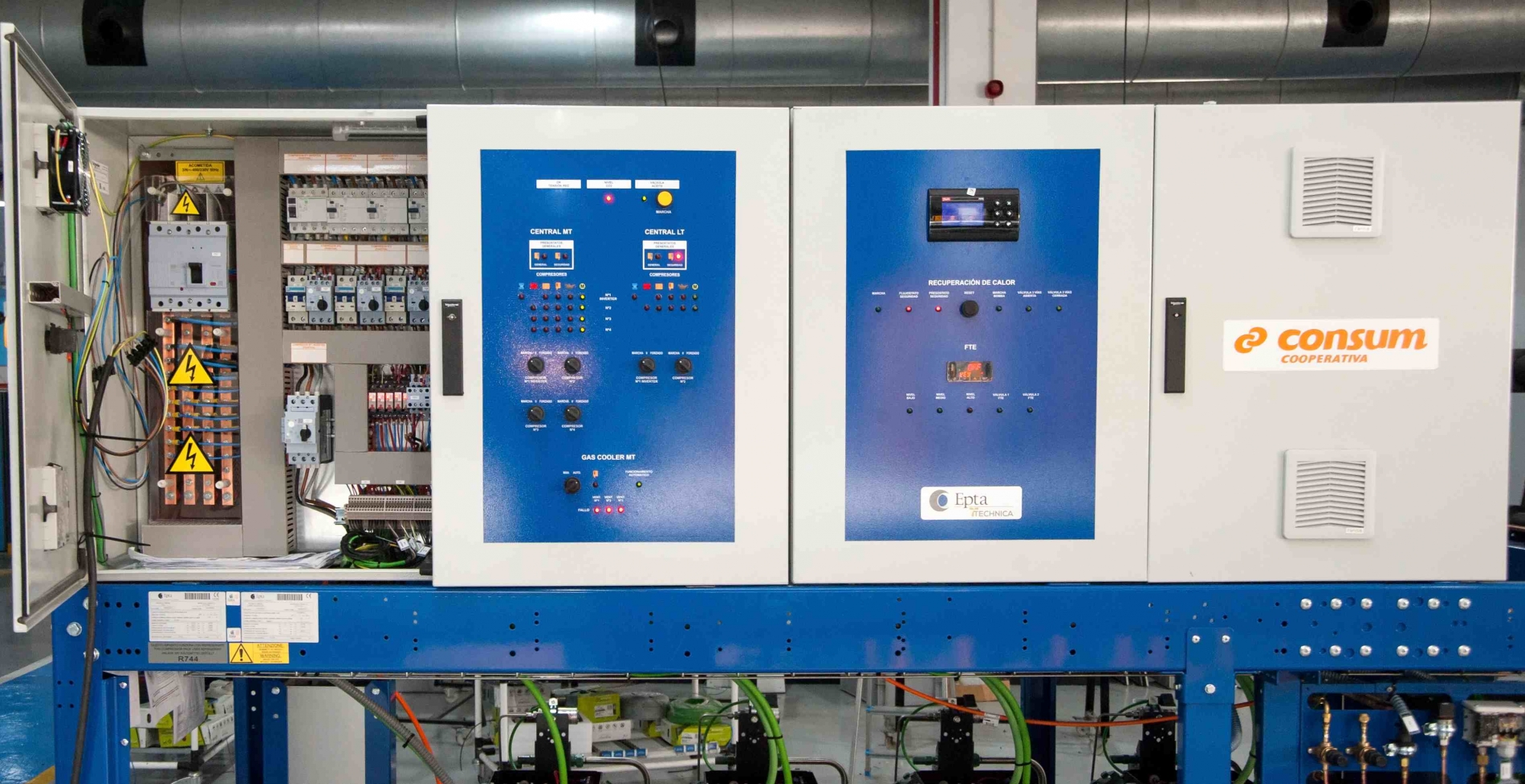
Communication protocol support, Modbus RTU and fieldbus options in particular, is what determines whether your soft starter becomes a fully visible node (remote I/O) in your automation system or an isolated component your PLC cannot monitor. This decision belongs at the design stage because it shapes your control architecture, not just your wiring.
RS-485/Modbus-RTU communication is built for easy integration with PLCs, allowing the soft starter to report status and accept commands as part of a larger control scheme rather than operating as a standalone unit. The Modbus protocol gives full control and status information, including the ability to write operating parameters remotely.
For an OEM machine that will be integrated into a customer's plant-wide SCADA or PLC network, this connectivity is not optional. Smart diagnostics delivered over these protocols support predictive maintenance and troubleshooting, giving your end customer visibility into electric motor health without adding separate sensors. Specify protocol compatibility early and your automation integrator is not left guessing at commissioning.
Soft starter customization supports industrial automation compatibility by exposing the parameters your control system needs, including start/stop commands, fault status and current readings, through the same communication layer your PLC already uses, instead of requiring separate hardwired inputs for every function. That consolidation is what makes a soft starter genuinely "automation-ready," rather than automation-adjacent.
Fieldbus communication makes it possible to start and stop the motor, read currents and frequency and retrieve protection and fault status directly through the PLC network, per fieldbus documentation for industrial soft starters. This removes the need for a technician to interpret physical indicator lights on the panel door.
When you are laying out a control cabinet for an OEM build, confirming which PLC brands and communication protocols the soft starter supports should happen alongside your PLC selection, not after. Aligning these choices at the same stage keeps your bill of materials consistent across every unit you build.
OEM builds require this customization to be repeatable across every unit of a product line, while an end-user retrofit only needs to solve for one existing machine and its already-installed wiring. That single difference changes almost every decision you make about configuration.
An OEM engineer specifying a soft starter is really specifying a standard: the ramp profile, protocol settings and protection thresholds chosen for the first unit need to work identically on unit two hundred. A retrofit, by contrast, is often shaped around constraints that already exist, legacy PLC hardware, existing panel space, wiring that cannot easily change.
This is also where documentation matters more for OEMs. Recording your configuration as part of the machine's technical file means service technicians in the field and future engineering revisions, inherit a documented standard rather than reverse-engineering settings from a working unit. Consulting your electric motor supplier during the design phase, before parameters are finalized, helps ensure the starter and motor are correctly paired from the start.
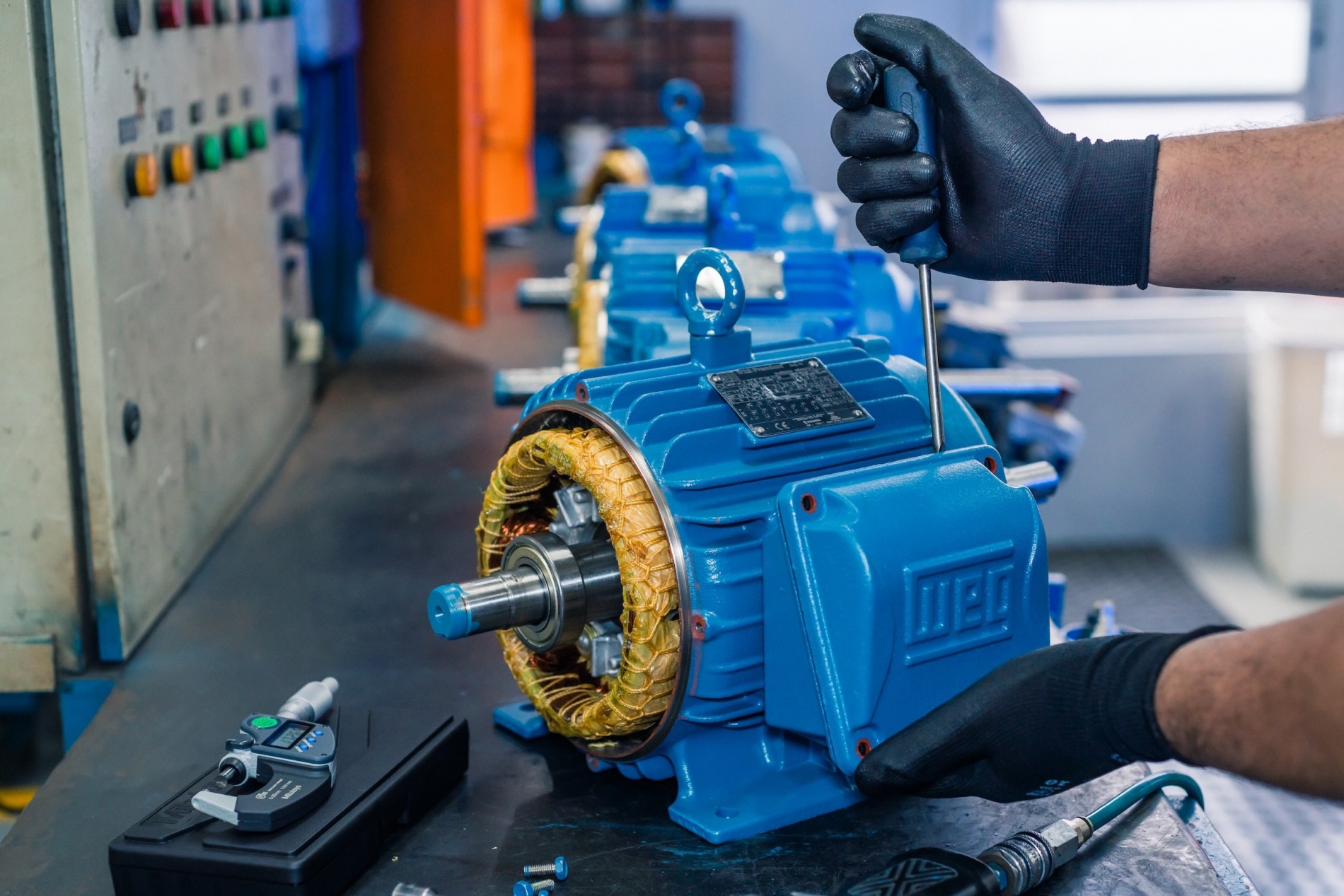
Correctly configured soft starter parameters extend equipment life by reducing the mechanical and thermal stress that motors, bearings and connected loads experience every time the machine starts, a benefit that compounds over thousands of start cycles across a machine's service life. This is one of the clearest returns on getting the configuration right at the design stage.
For large industrial motors, reducing mechanical and thermal stress during startup can meaningfully extend service life, with bearings, shafts and windings all lasting longer as a result. Direct-on-line starting is cheaper upfront, but it exposes the system to current surges and mechanical stress that a properly configured soft starter is designed to reduce, raising long-term costs wherever one is skipped.
For OEMs, this is a design decision with commercial consequences. Equipment built around a well-configured soft starter generates fewer warranty claims and fewer premature-failure complaints, both of which affect your reputation with the industrial buyers, distributors and plant engineers who specify your machines for Canadian mining, food and beverage and water and wastewater applications.
The right questions to ask your distributor during the design phase are about compatibility, not just price, which PLC protocols are supported, what ramp and current-limiting ranges are configurable and how the soft starter behaves under your specific load profile. Asking these questions early avoids a mismatch discovered during commissioning.
Ask specifically: What communication protocols does this soft starter support and are they compatible with our PLC platform? What ramp-up, ramp-down and current-limiting ranges can be configured and do they suit our load type? Does it include bypass contactors for high-duty-cycle applications and how does that affect heat dissipation in our panel design? What diagnostic data can we access remotely and does it integrate with the maintenance systems our end customers already use?
Bringing these questions to Pamensky (WEG Canada) or your distributor before finalizing your bill of materials means the equipment is selected to fit your automation architecture, not adapted to it after the fact.
OEMs are under growing pressure to ship machines that integrate cleanly into automated plant environments from day one, without requiring the end customer to retrofit communication or control hardware after installation. Getting soft starter decisions right at the design stage, rather than adjusting them after the machine is built, is one of the more direct ways to meet that expectation.
Pamensky supports OEM and industrial manufacturer builds across sectors where automation integration is increasingly the standard, including mining, food and beverage and water and wastewater applications. Getting ramp profiles, current limiting and communication protocols right before the machine leaves your shop is what lets your equipment step into an automated environment without a redesign.
Specify your soft starter with the same rigor you apply to your PLC and drive selection and automation integration becomes a planning step instead of a punch-list item. Contact Pamensky (WEG Canada) today about your next OEM build and get configuration guidance before your design is finalized, not after.
Reviewed by: Alfonso Cordova, Sales Automation
Last reviewed: August 2026
Ramp-up and ramp-down profiles, current-limiting settings and communication protocol support (such as Modbus RTU) matter most, because they determine how the device integrates with your automation system and how well it matches your specific load profile.
OEMs need configuration that is repeatable and documented across every unit of a product line, while retrofits are typically shaped around one existing machine's wiring and legacy hardware constraints.
RS-485/Modbus-RTU communication is a standard feature that supports integration with PLC systems, allowing the device to report status and accept commands as part of a broader automation network.
Yes, but adjusting them after installation typically requires reopening panel wiring and reprogramming, which costs more time than specifying the correct profile during the design phase.
By reducing mechanical and thermal stress during startup, they help bearings, shafts and windings last longer, particularly on large industrial motors subjected to frequent start cycles.
Ask about supported PLC protocols, configurable ramp and current-limiting ranges, bypass contactor availability for high-duty-cycle use and what diagnostic data can be accessed remotely.
No. Soft starters and variable frequency drives solve different problems. Soft starters manage controlled starting and stopping, while VFDs provide continuous speed control. The right choice depends on your application's requirements.