Specifying electric motors for industrial applications involves more than horsepower and speed. The right specification must account for enclosure type, mounting, efficiency class, environmental conditions, control requirements and long-term serviceability. When these criteria are defined correctly at the design stage, engineers can reduce downtime, improve system control and support future upgrades without major redesign.
A strong motor specification also protects project outcomes over the full equipment lifecycle. It helps confirm compatibility with industrial automation systems, supports reliable operation with a variable frequency drive (Inverter / VFD) and simplifies future replacement using consistent frame, mounting and electrical data. For engineers, the goal is clear: define an electric motor that performs reliably now and remains practical to maintain, source and upgrade later.
Motor specification decisions made early in a project shape reliability, safety and integration performance for years. In Canada, energy efficiency regulations apply to electric motors and establish minimum efficiency requirements for regulated products, making efficiency class and compliance part of the design conversation from the start.
If the specification is too narrow, procurement flexibility can suffer. If it is too loose, the final installation may face fit, cooling, protection or drive compatibility issues. Neither outcome supports reliable system performance.
For engineers working on new equipment, retrofits or modular systems, early specification should define more than output power. It should capture the mechanical, electrical and environmental details that affect commissioning, maintenance and future expansion. That includes enclosure, insulation, service factor, ambient conditions, hazardous location requirements and whether the motor will operate across a speed range through a variable frequency drive.
The most common industrial choice remains the three-phase induction motor because it offers dependable performance, broad availability and compatibility with a wide range of driven equipment. This widespread use is one reason induction motor selection remains central to industrial design.
For many engineered systems, squirrel cage induction motors remain the standard because they balance efficiency, durability and practical maintenance. They are widely used in pumps, fans, conveyors, compressors and packaged equipment, where stable torque and predictable performance are required. They also align well with many modern control strategies.
Beyond the base motor type, engineers should confirm whether the application requires:
The key is matching the motor construction to the real operating environment. A technically correct motor type on paper can still become the wrong solution if enclosure, cooling or drive duty are not considered alongside the application.
Choosing between TEFC and ODP starts with the operating environment. TEFC motors are generally better suited to dirty or corrosive environments because they limit the exchange of outside cooling air through the motor internals, while ODP motors are intended for areas with reasonably clean, non-corrosive air. This difference directly affects contamination risk, maintenance intervals and service life.
A TEFC enclosure is often the preferred choice when the application involves:
A TEFC motor helps isolate internal components from the surrounding atmosphere. That improves reliability in harsher installations and can support longer operating life when contamination is a concern.
An ODP motor can still be an appropriate solution in controlled indoor environments with clean airflow and low contamination risk. It may be selected in mechanical rooms or protected industrial spaces where ventilation conditions are known and stable. Even then, engineers should verify that future site conditions will remain consistent with the enclosure choice.
Enclosure selection should never be treated as a minor accessory decision. It directly affects cooling methods, contamination exposure and long-term maintenance planning.
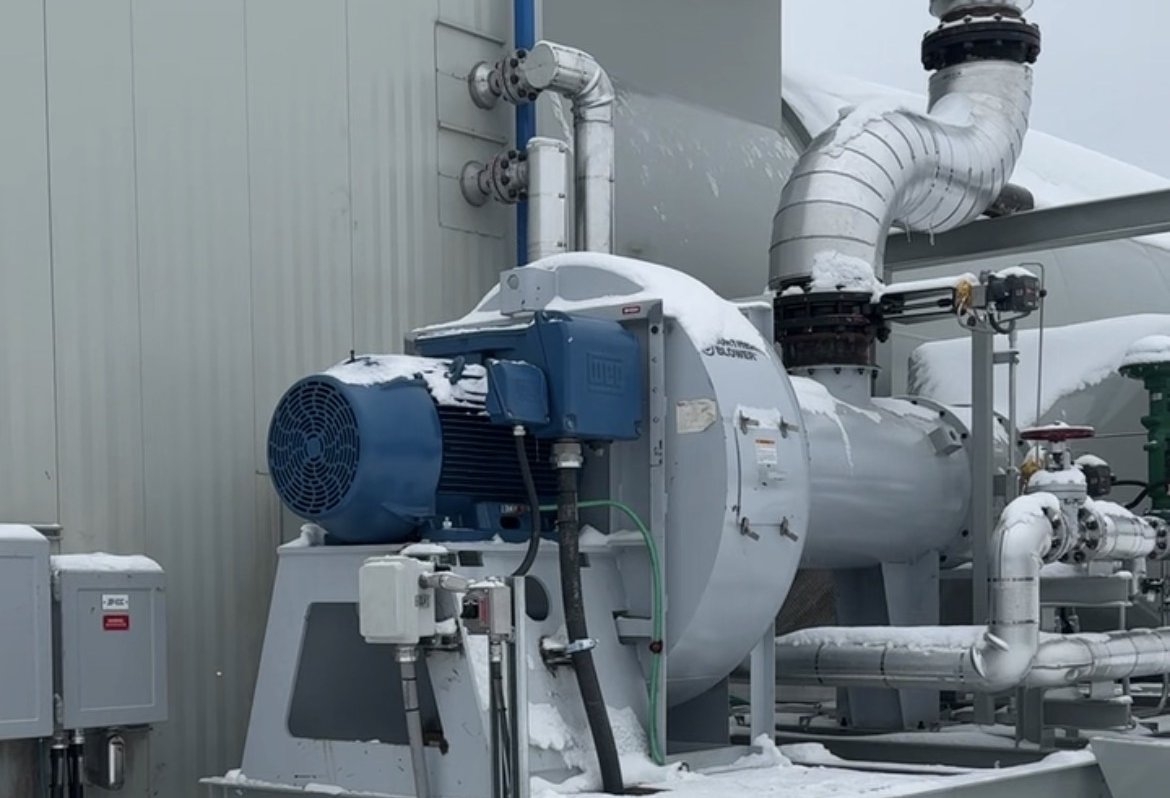
Hazardous location motors are required when the installation area is classified for the presence of flammable gas, vapour, combustible dust or ignitable fibres under applicable electrical codes and site classification rules. In Canada, hazardous locations are addressed under the Canadian Electrical Code requirements for hazardous locations, which includes Class, Division and Zone frameworks for evaluating electrical equipment in these environments.
Engineers should not specify a standard general-purpose motor where the area classification requires certified protection. The decision must be based on the site hazard assessment, not on appearance, preference or budget pressure.
Explosion-proof and hazardous location motor selection should confirm:
The risk of under-specifying here is significant and can lead to safety and compliance issues. A mismatch between the area classification and the motor certification can create both compliance exposure and major safety consequences.
Where combustible dust or flammable atmospheres may be present, the motor specification should be reviewed together with the electrical engineer, safety lead and applicable code requirements. This coordination is especially important in sectors such as grain handling, chemical processing, mining, energy, coatings and some manufacturing environments across Canada.
A strong motor specification should define the full operating requirement, not only nominal output. Canada’s regulated motor framework and recognized efficiency test methods reinforce how performance and compliance depend on measurable technical criteria rather than general descriptions.
At minimum, engineers should document the following:
Frame size affects physical interchangeability, shaft dimensions, mounting geometry and replacement options. If frame data is omitted or loosely defined, future maintenance can become difficult even when the electrical rating appears correct.
Foot-mounted, flange-mounted and specialty mounting configurations must align with the driven equipment. A mismatch here can force field modification, increase alignment risk and delay commissioning.
Service factor indicates allowable overload under defined conditions. It should not be used as a shortcut to compensate for undersizing. Instead, it should be treated as part of the thermal and mechanical design margin.
Efficiency class matters for operating cost, compliance and heat generation. Natural Resources Canada notes that Canada’s regulations set minimum energy efficiency performance standards and that many manufacturers also offer motors above those minimum levels, including Super Premium / IE4, Ultra Premium / IE5 and even higher under special design.
Voltage, phase, frequency, full-load current, speed and torque characteristics must be clear. These values affect protection coordination, starter or drive selection and system integration.
These details influence motor life, especially in demanding duty cycles or warmer ambient conditions. They become more important where speed control or repeated starts increase thermal stress.
If a variable frequency drive will be used, the specification should confirm inverter-duty suitability, insulation system capability, bearing protection strategy where needed and acceptable operating speed range.
Each of these details supports reliability. Omit them and the project may still ship. It just may not perform as intended.
Not every motor is equally suited for operation on a variable frequency drive. Drive-fed operation changes the electrical and thermal conditions seen by the motor and engineers need to account for insulation stress, low-speed cooling limitations and bearing effects during selection. This is particularly relevant as industrial automation systems demand more precise speed and torque control.
A motor intended for VFD use should be evaluated for:
This is not only a control issue. It is a system reliability issue.
In many applications, pairing the right motor with the right drive improves process control, reduces mechanical stress during starting and supports energy-efficient operation. But that benefit depends on technical alignment between the motor insulation system, load profile and control method. Engineers should specify both the motor and the drive as a connected package rather than treating them as separate procurement items.

CAD drawings and digital selection tools support better specification by reducing fitment uncertainty early in the design process. Engineers can use dimensional data, mounting details, shaft information and performance parameters to confirm that the selected motor aligns with the equipment layout and system constraints before procurement begins.
This improves equipment integration accuracy. It also helps reduce the risk of field changes, alignment problems or space conflicts during installation.
Selection tools are especially useful when multiple constraints need to be reviewed together, including:
For modular equipment design, this approach improves repeatability. It gives engineering teams a clearer path for standardization and future replacement without compromising technical performance.
A motor specification should support more than initial commissioning. It should also make future service events more manageable by improving interchangeability, reducing sourcing delays and preserving access to technical data over time.
This is particularly important in industrial operations where unplanned downtime can disrupt production schedules and maintenance windows. A technically valid motor that becomes difficult to replace years later can create avoidable operational risk.
To support long-term reliability, engineers should consider:
Planning for maintenance at the specification stage strengthens lifecycle performance. It also supports better inventory decisions and more predictable plant operations.
Motor specification has a direct impact on reliability, compliance, maintainability and system performance. When engineers define enclosure type, efficiency class, hazardous location requirements, mounting details and variable frequency drive compatibility with precision, they create a stronger foundation for both current operations and future upgrades.
For Canadian industrial applications, that specification discipline also supports alignment with regulatory requirements, operating conditions and lifecycle service expectations. Better decisions made at the design stage lead to better outcomes in the field.
Planning a new system or refining your motor specifications? Connect with VJ Pamensky today to evaluate motor types, enclosure selection, drive compatibility, and long-term service considerations for Canadian industrial applications.
An electric motor specification includes motor type, frame size, mounting arrangement, enclosure, voltage, frequency, service factor, efficiency class, insulation details and drive compatibility. It should also reflect environmental conditions, maintenance planning and any hazardous location requirements.
A TEFC motor is generally a better choice when the environment includes dust, moisture, airborne contamination or outdoor exposure. An ODP motor is more appropriate in clean, protected indoor settings with stable airflow conditions.
Drive compatibility matters because operation with a variable frequency drive (VFD) can affect motor heating, insulation stress, low-speed cooling and bearing performance. The motor should be evaluated for inverter-duty suitability and operating range before final selection.
Hazardous location motor specification must align with the area classification, gas or dust group, temperature class and certification requirements defined for the site. It is based on safety and compliance requirements, not only performance needs.
Maintenance and spare planning improve long-term reliability by supporting interchangeability, technical data access and replacement availability. This helps reduce downtime and simplify service over the life of the equipment.