Reviewed by: Alfonso Cordova, Sales Automation and Michael Ishlove, Technical Manager
Last reviewed: July 2026
For OEMs and facility engineers managing aging DC motor infrastructure, the question eventually shifts from "Can we repair this again?" to "Should we still be repairing this?". Every brush replacement, every commutator resurfacing and every emergency callout pushes that calculus closer to a tipping point. DC motors have powered industrial applications for decades, but the maintenance burden, parts obsolescence and downtime risk are mounting.
The decision to replace a DC motor with an AC motor and variable frequency drive from VJ Pamensky (WEG Canada) isn't purely technical. It's financial, operational and strategic. You're weighing repair frequency against upfront investment, emergency failure risk against planned conversion windows and short-term budget constraints against long-term lifecycle savings. This article provides a decision framework to help you determine when DC motor replacement becomes the smarter path, and when repair still makes sense.
Certain patterns signal that your DC motor has crossed from manageable maintenance into chronic reliability problems. Recognizing these early gives you time to plan a conversion instead of reacting to an emergency failure.
Brush replacement frequency tells the story. If you started with annual replacements, and you're now ordering brushes quarterly or monthly, the wear rate is accelerating. That compression signals deeper issues: commutator surface degradation, increased electrical resistance or misalignment that's grinding brushes faster than design specs predict.
Visible commutator wear is the next red flag. Grooving, pitting, discoloration or out-of-round conditions mean the surface that should be smooth and conductive is failing. Resurfacing can buy time, but only if the commutator has enough material left. Once you're down to minimum thickness, replacement is the only option and that assumes the part is still available.
The DC motor and controller must be analyzed as a complete system when evaluating replacement. Space constraints, mechanical devices connected to the motor or machine and replacement component availability all factor into retrofit feasibility. Parts lead times extending beyond your acceptable downtime windows create operational risk you can't manage around. When a brush that used to ship in three days now takes six weeks, you're forced into expensive stockpiling or you're gambling that nothing fails before the next order arrives. Hundreds of thousands of components reach end-of-life annually as manufacturers phase out legacy product lines and DC motor components are concentrated in that aging cohort.
Component availability is becoming the forcing factor for many retrofits. As fewer wholesalers stock DC systems, the risk that a machine remains out of commission waiting for parts can push conversion timelines forward dramatically, turning a planned five-year replacement cycle into an urgent six-month decision when critical components become unavailable.
Repair costs approaching 50 to 60 percent of new equipment investment deserve scrutiny. At that threshold, you're essentially pre-funding half a replacement while still carrying the old unit's failure risk and maintenance burden.
Sole-source component dependencies compound the problem. If only one supplier still manufactures the exact brush grade or control board your motor requires, you've lost negotiating leverage and supply chain resilience. One supplier acquisition, one factory closure or one raw material shortage can strand your asset.
The industrial component supply chain is actively de-emphasizing DC motor parts, an accelerating shift driven by market economics and manufacturer rationalization.
Component lifecycle compression means parts that used to remain available for 20 or 30 years now hit obsolescence in 10 to 15. Manufacturers consolidate product lines, discontinue slow-moving SKUs and redirect engineering resources toward AC motor and drive technology where market growth justifies investment. For OEMs and facility engineers, that translates to shrinking supplier lists and longer lead times.
Sole-source dependencies create fragility. When only one manufacturer still produces a specific brush composition, commutator lamination or control board, you're entirely exposed to their business decisions. Supplier exits, acquisitions or production shifts to overseas facilities with minimum order quantities can make small-batch replacement orders uneconomical or impossible.
Extended repair turnaround times follow naturally. If a motor shop has to special-order a commutator instead of pulling it from shelf stock, your two-day repair becomes a two-week repair. Emergency expediting fees add cost without eliminating risk. The part still has to exist and be in a supplier's inventory.
Component manufacturers are consolidating around fewer platforms with higher volume and legacy DC motor parts don't meet those thresholds. The result is a supply base that's both smaller and less responsive than it was a decade ago.
For critical applications, this creates a modernization trigger that's independent of the motor's mechanical condition. A DC motor that's mechanically sound but dependent on components with 12-week lead times carries more operational risk than a new AC motor with next-day drive replacement availability.
The ongoing maintenance load is where DC and AC motor systems diverge most sharply. DC motors require skilled mechanical intervention on predictable cycles; AC motor and VFD systems require less frequent attention and can often be monitored remotely.
DC motor brush inspection and replacement typically runs on quarterly to semi-annual cycles depending on application duty. Each cycle requires a technician to access the motor, inspect brush length and spring tension, check commutator surface condition and replace brushes when they hit minimum length. That's planned downtime, parts cost and skilled labour hours.
Commutator resurfacing adds another layer. Depending on operating conditions, commutators need resurfacing every one to three years to remove grooves, pitting and oxidation. Resurfacing requires motor removal, transport to a shop with lathe equipment, machining and reinstallation, often a multi-day process.
AC motor and VFD maintenance is structurally different. AC motors require bearing lubrication and inspection, typically on annual or longer intervals. VFDs need periodic thermal inspection, fan filter cleaning and capacitor health checks, but those tasks are faster and less invasive than brush replacement. Many modern VFDs log operating hours, thermal events and fault codes, enabling condition-based maintenance instead of fixed-interval intervention.
Labour hour comparison tells the story. A typical industrial DC motor might consume 8 to 12 labour hours annually for brush service, inspection and minor repairs. An equivalent AC motor and VFD system often runs 3 to 5 hours annually and those hours skew toward inspection rather than parts replacement.
The maintenance burden gap widens over a 10 or 15-year horizon. The DC motor accumulates dozens of service cycles, each with downtime and parts cost. The AC motor stays in service with minimal intervention and the VFD, if it fails, can often be replaced in hours rather than days.
Downtime cost is the variable that tips many electric motor replacement decisions. The difference between a planned conversion and an emergency repair can be hundreds of thousands of dollars in lost production, expedited shipping and premium labour rates.
Planned conversion windows let you control the schedule. You coordinate with production, stage replacement equipment on-site, line up contractors and execute the swap during a scheduled maintenance outage or low-demand period. A typical DC to AC motor conversion might require 24 to 48 hours for mechanical installation, electrical hookup, VFD commissioning and testing. Manageable when planned, catastrophic when unplanned.
Emergency failure scenarios eliminate that control. Industry benchmarks place manufacturing downtime costs at an average of $260,000 per hour across sectors, though actual costs vary significantly by industry, facility size and application criticality. Even if your operation runs well below that figure, unplanned stoppages compress timelines and inflate costs. Emergency motor repair or replacement means overnight shipping, premium technician rates and scrambling for rental equipment if lead times stretch beyond hours into days.
Consider a scenario comparison. A planned 48-hour conversion executed during a scheduled weekend shutdown costs the motor, VFD, installation labour and minimal production impact because the line wasn't scheduled to run. An emergency failure on a Tuesday morning during peak production season costs the same hardware plus expedited freight, after-hours labour premiums, five days of lost throughput while waiting for a commutator to ship and potential customer penalties for missed delivery commitments.
The risk calculus changes as motors age. A DC motor with 15 years of service and increasing repair frequency carries higher emergency failure probability than a new AC motor with manufacturer warranty coverage. That risk has a cost. Either you pay it in downtime and expediting fees when failure happens or you pay it in proactive replacement to eliminate the exposure.
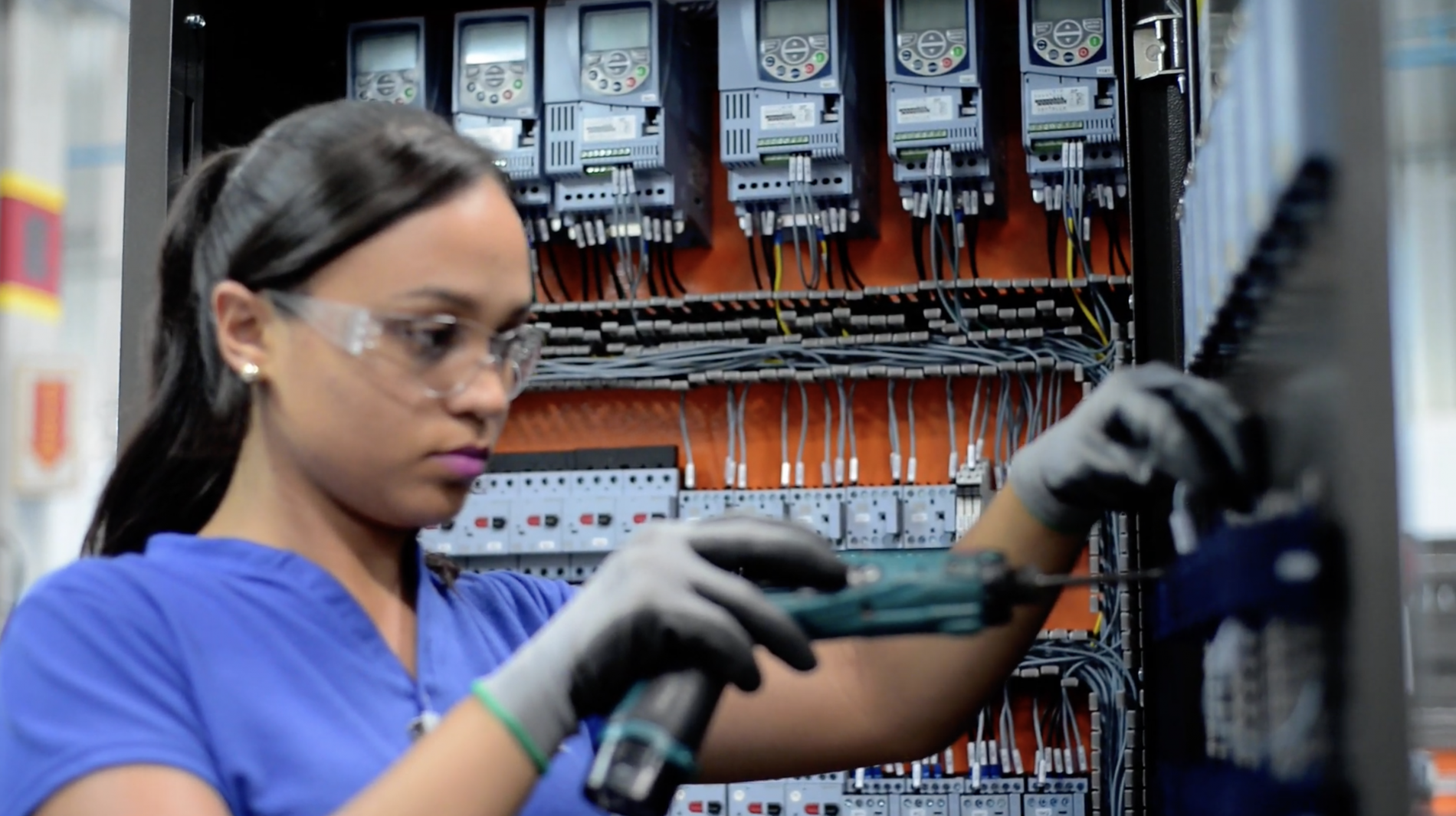
Total cost of ownership over 10 to 15 years is the framework that reveals whether ongoing repair or modernization delivers better value. The analysis requires honest accounting: parts, labor, downtime, efficiency losses and risk.
The DC repair path accumulates costs in layers. Start with parts: brushes, commutators, bearings and control components over a decade. Add labour: service hours at prevailing technician rates, multiplied by 20 or 30 service cycles. Layer in downtime: planned outages for maintenance plus unplanned stoppages for failures. Include efficiency losses if the motor is oversized or running at suboptimal speed without variable control. Finally, add risk premium, the cost of carrying safety stock, maintaining supplier relationships for obsolete parts and self-insuring against supply chain disruption.
The AC motor and VFD path front-loads investment. You pay for the motor, the drive, installation labour and commissioning. After that, costs drop sharply. Maintenance intervals stretch, parts are commodity items available from multiple suppliers and efficiency gains reduce operating expense. VFDs can reduce energy consumption by up to 50 percent in variable-load applications like pumps, fans and conveyors where speed modulation matches load demand.
Payback period depends on application intensity and existing motor condition. A high-utilization DC motor burning through brushes every quarter might pay back conversion costs in 18 to 24 months purely on maintenance savings. A low-duty motor in good condition might stretch payback to five or six years, where efficiency gains and risk reduction provide the justification rather than avoided maintenance.
The 10-year model typically favours conversion once repair frequency crosses twice annually. At that threshold, parts and labour costs compound quickly and the probability of emergency failure during the next decade approaches certainty. The AC motor and VFD eliminate that escalation and cap your maintenance exposure at predictable levels.
Beyond cost avoidance, AC motor and VFD systems deliver performance capabilities that DC motors can't match without significant additional complexity. For OEMs designing new equipment or facility engineers modernizing existing lines, these capabilities create operational value.
Precise speed control is the most visible gain. VFDs adjust motor speed in real time by varying frequency and voltage to the AC motor, delivering smooth, stepless control across the full operating range. That eliminates the need for mechanical speed reduction, belts or gearboxes in many applications, simplifying the drivetrain and reducing maintenance points.
Soft-start capabilities reduce mechanical stress on coupled equipment. Instead of across-the-line starting that subjects shafts, couplings and driven loads to high inrush current and torque shock, VFDs ramp speed gradually. That extends equipment life, reduces wear on belts and chains and minimizes electrical demand spikes that can trigger utility demand charges.
Energy savings in variable-load applications are substantial. Pumps and fans running at partial speed consume dramatically less power than full-speed operation with throttling or bypass control. The relationship is cubic, cutting speed by 20 percent reduces power consumption by roughly 50 percent. Over thousands of operating hours annually, that translates to significant cost reduction. Canada's large electric motor market reflects growing adoption of energy-efficient motor and drive systems across industrial sectors.
Torque control improvements matter for applications requiring precise load handling. VFDs can deliver constant torque at low speeds, something DC motors traditionally excelled at and they do it without the commutation losses and brush friction that reduce DC motor efficiency at partial load.
The global VFD market underscores this shift driven by efficiency mandates, automation integration and the performance advantages modern drives deliver.
Conversion isn't always the right answer. Certain scenarios favour continued DC motor operation and repair, either because the application doesn't justify the investment or because the operational context makes replacement premature.
Short remaining service life is the clearest case. If the entire production line or piece of equipment is scheduled for retirement, replacement or major overhaul within two years, investing in motor conversion doesn't make financial sense. Repair the DC motor, run it to end-of-life and address motor technology as part of the larger equipment refresh.
Low-criticality applications where downtime doesn't halt production or trigger significant cost warrant a different calculation. A DC motor driving a non-essential conveyor, auxiliary pump or low-utilization machine can stay in service longer because failure risk doesn't carry the same penalty. Repair when needed, replace when parts become unavailable.
Budget constraints requiring staged modernization are a practical reality. Not every facility can fund wholesale conversions across all DC motor assets simultaneously. Prioritize by criticality and condition. Convert the high-risk, high-impact motors first and defer lower-priority units until capital becomes available or failure forces the decision.
Applications where DC motor characteristics provide unique advantages still exist, though they're increasingly niche. Some legacy processes were designed around DC motor torque curves, speed control methods or electrical characteristics that would require process reengineering to accommodate AC motor and VFD equivalents. If the process works and the motor is supportable, continuing DC operation can be the pragmatic choice.
The key is making the decision deliberately rather than defaulting to repair because it's familiar. Evaluate each motor against the decision criteria, understand the risk and cost profile and choose the path that aligns with operational priorities and budget realities.
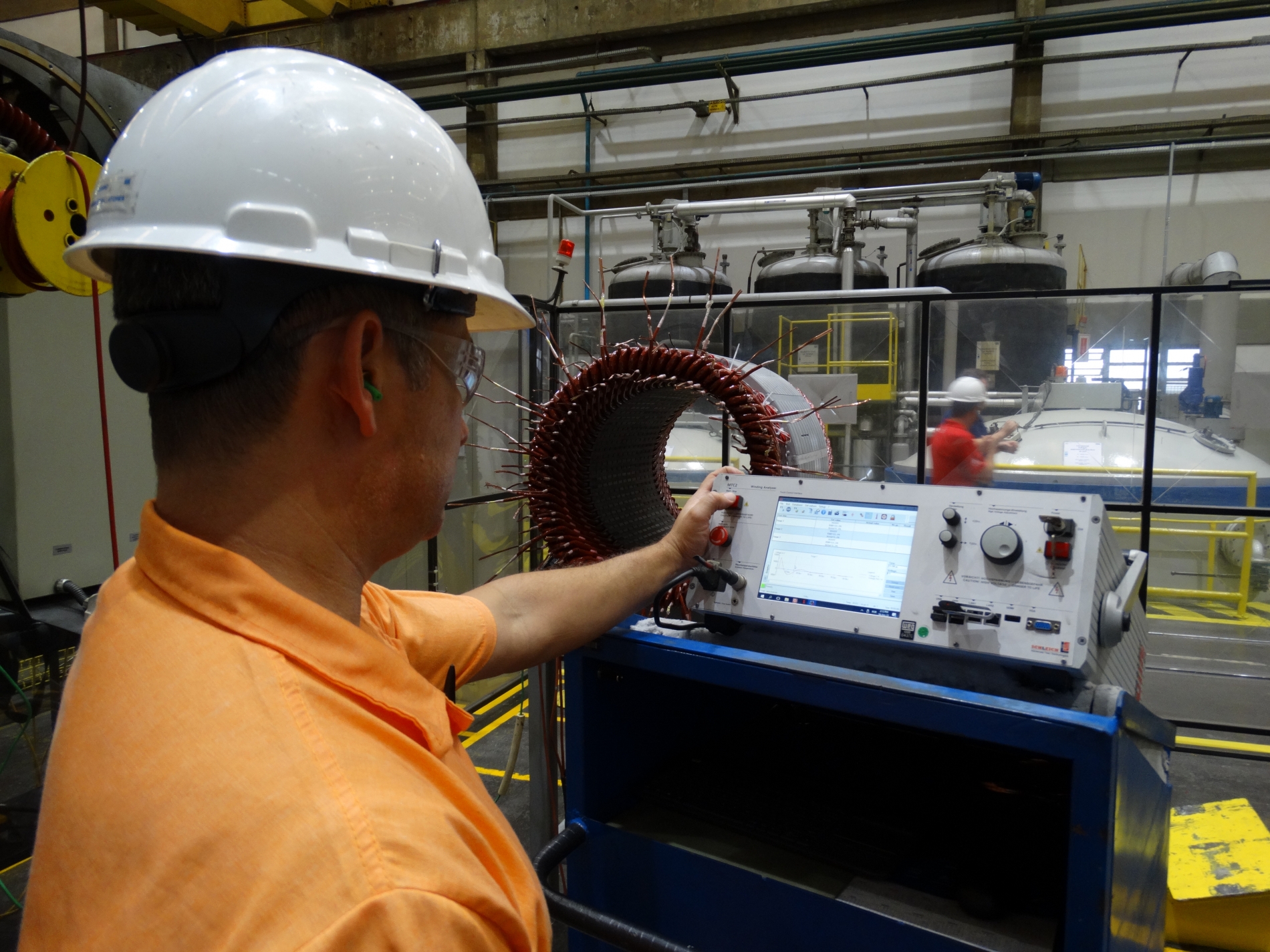
Structured decision criteria remove ambiguity and ensure you're weighing the right factors. Use this checklist to evaluate each DC motor in your operation.
Motor age and repair history provide the baseline. Motors over 15 years old with increasing repair frequency are prime conversion candidates. Track repair costs, parts lead times and failure incidents over the past three years. If the trend is upward, it will continue.
Application criticality scoring assigns priority. Rank motors by their impact on production: critical path equipment that stops the line if it fails, important equipment that reduces capacity and non-critical equipment where failure is inconvenient but manageable. Focus conversion resources on critical and important categories first.
Downtime tolerance and production impact quantify the cost of failure. Calculate lost revenue per hour of downtime for each motor's application. High-cost downtime justifies higher conversion investment and shorter payback requirements.
Parts availability and lead time assessment measure supply chain risk. If brushes, commutators or control components have lead times over four weeks or come from sole-source suppliers, the motor is at risk regardless of mechanical condition. Factor that risk into the replacement decision even if the motor is currently running well.
Strategic operational goals look beyond immediate cost. If you're moving toward automation integration, predictive maintenance or energy management systems, AC motor and VFD systems provide the connectivity and control architecture to support those goals. In many cases, legacy DC motor systems provide fewer options for modern monitoring, automation integration and predictive maintenance compared with AC motor and VFD systems. They can't deliver the operational data modern systems require.
Total cost of ownership modeling ties it together. Build a 10-year cost projection for both paths, repair and conversion, using realistic assumptions about parts cost escalation, failure probability and efficiency gains. The model won't be perfect, but it will reveal whether you're within two years of breakeven or ten.
Run each motor through this checklist annually. Conditions change, parts availability deteriorates, repair costs climb, strategic priorities shift. A motor that justified continued repair last year might tip into conversion territory this year.
The shift from DC motor repair to AC motor and VFD conversion isn't a one-size decision. It's driven by application criticality, maintenance burden, parts availability and the total cost of ownership over a realistic time horizon. The motors that justify immediate conversion are the ones consuming disproportionate maintenance resources, carrying high failure risk or operating in applications where downtime costs dwarf equipment investment.
Start with a structured assessment. Inventory your DC motor population, track repair history and costs, evaluate parts lead times and calculate downtime impact for each application. Prioritize conversions based on criticality and cost. Tackle the high-risk, high-impact motors first and stage lower-priority units as budget allows.
The long-term trajectory is clear: DC motor component supply chains are contracting, repair expertise is aging out of the workforce, and the performance and efficiency advantages of AC motor and VFD systems are widening the gap. Proactive conversion during planned maintenance windows costs less and delivers more value than reactive replacement during emergency failures.
Contact VJ Pamensky today to discuss your DC motor replacement strategy and explore how modern AC motor and VFD systems can reduce maintenance burden, improve reliability and support your automation goals.
Reviewed by: Alfonso Cordova, Sales Automation and Michael Ishlove, Technical Manager
Last reviewed: July 2026
When annual repair costs exceed 40 to 50 percent of replacement cost or when parts lead times extend beyond your acceptable downtime window, the motor has crossed into uneconomical territory. Age alone isn't the determining factor. A well-maintained 20-year-old motor with readily available parts might still make sense, while a 10-year-old motor dependent on obsolete components might not. Track repair frequency, parts availability and total ownership cost over a rolling three-year window to catch the inflection point.
AC motors with VFDs eliminate brush and commutator maintenance, provide precise speed control without mechanical losses, deliver soft-start capabilities that reduce equipment stress and cut energy consumption by up to 50 percent in variable-load applications. You also gain supply chain resilience. AC motor parts are commodity items with multiple suppliers and short lead times. For operations moving toward automation and predictive maintenance, VFDs provide the connectivity and control architecture DC motors can't match.
A planned conversion typically requires 24 to 48 hours for mechanical removal and installation, electrical hookup, VFD mounting and wiring, commissioning and testing. Complexity varies with motor size, mounting configuration and whether you're reusing existing infrastructure or installing new mounting bases and conduit. Emergency conversions take the same mechanical time but lose days or weeks waiting for equipment to arrive, while planned conversions let you stage everything on-site before the outage window opens.
Yes. Modern VFDs communicate via industrial protocols like Modbus, Ethernet/IP and Profibus, making integration with PLCs, SCADA systems and building management systems straightforward. Many VFDs also support analog control signals for legacy systems. The integration opens pathways for remote monitoring, automated fault logging, energy tracking and condition-based maintenance scheduling, capabilities that DC motor systems can't provide without extensive retrofitting.
Payback periods range from 18 months to six years depending on application duty, existing motor condition and energy savings potential. High-utilization motors with frequent repair cycles and variable-load profiles (pumps, fans) pay back fastest, often within two to three years on maintenance savings and efficiency gains alone. Low-duty motors in good condition stretch payback longer, where the justification shifts toward risk reduction and long-term supportability rather than immediate cost recovery.