Reviewed by: Michael Ishlove, Technical Manager
Last reviewed: May 2026
Electric motor selection has a direct impact on system performance, energy consumption, reliability and lifecycle cost. In Canadian industrial environments, the right motor must do more than rotate a shaft. It must align with load requirements, operating conditions, control strategy, efficiency expectations and compliance demands.
For engineers, OEMs, project managers and distributors, motor selection is not a one-line specification exercise. It is a technical decision that affects uptime, maintenance intervals, equipment compatibility and long-term operating cost. Electric motors sold in Canada are subject to federal energy efficiency regulations and alternating current induction motors remain among the most commonly used motors in Canadian industry. That makes proper selection critical at both the design and replacement stage.
This guide outlines the core principles behind effective electric motor selection. It covers motor sizing, load and torque requirements, duty cycle, environmental conditions, motor types, application fit, common specification mistakes and the signals that indicate when a motor should be upgraded or replaced.
Electric motor selection is the process of matching a motor’s electrical and mechanical characteristics to the demands of a specific application. That includes horsepower or kilowatt rating, speed, torque, enclosure, voltage, insulation class, mounting, efficiency level and control compatibility.
A poorly matched motor can create immediate and long-term performance issues. Oversized motors often run inefficiently under light load. Undersized motors can overheat, trip protection devices and experience premature failure. Even modest improvements in motor efficiency can reduce electricity consumption and operating cost, especially in high-use industrial settings.
In Canadian operations, the stakes are high. A motor used in a conveyor, pump, fan, mixer, compressor or HVAC system may operate for thousands of hours per year. The wrong specification can increase energy use, shorten service life and disrupt production schedules.
The most important motor selection factors are load, speed, torque, duty cycle, power supply, starting method and efficiency level. These determine whether the motor can operate reliably under real process conditions rather than only on paper.
Load defines how much mechanical work the motor must perform. The application may involve constant load, variable load or cyclical load. Pumps and fans often follow variable torque characteristics. Conveyors and crushers may demand constant torque or high starting torque. The motor must match the real load profile, not only the nominal operating point.
When load is underestimated, the result is overheating and reduced insulation life. When load is overestimated, the motor may be oversized, which can reduce efficiency and worsen power factor under partial load conditions.
Motor speed must align with the driven equipment. Required output speed depends on process design, gear reduction, pulley ratios and the need for variable control. In many industrial systems, base motor speed alone is not enough. Engineers also need to determine whether the application needs fixed speed or speed variation through a variable frequency drive.
Speed errors affect throughput, flow, pressure and mechanical stress. In pumps, incorrect speed can alter system curve performance. In conveyors, it can reduce process consistency. In HVAC systems, it can affect airflow balance and energy use.
Torque is often where motor selection succeeds or fails. Starting torque, pull-up torque, breakdown torque and running torque must all be considered. High-inertia loads, frequent starts, loaded starts and shock-loaded systems require more than nameplate power matching.
Applications such as conveyors, crushers, mixers and certain compressors may need elevated starting torque. By contrast, centrifugal pumps and fans usually follow different torque behaviour and may benefit significantly from variable speed control.
Duty cycle describes how the motor operates over time. Continuous duty, intermittent duty, short-time duty and frequent start-stop operation all place different thermal demands on the motor.
A motor selected for continuous duty may not be appropriate for repeated starts, reversing cycles or fluctuating load peaks. Thermal performance matters because motor insulation life is closely tied to temperature rise. If the duty profile is misread, failure may occur even when horsepower appears adequate.
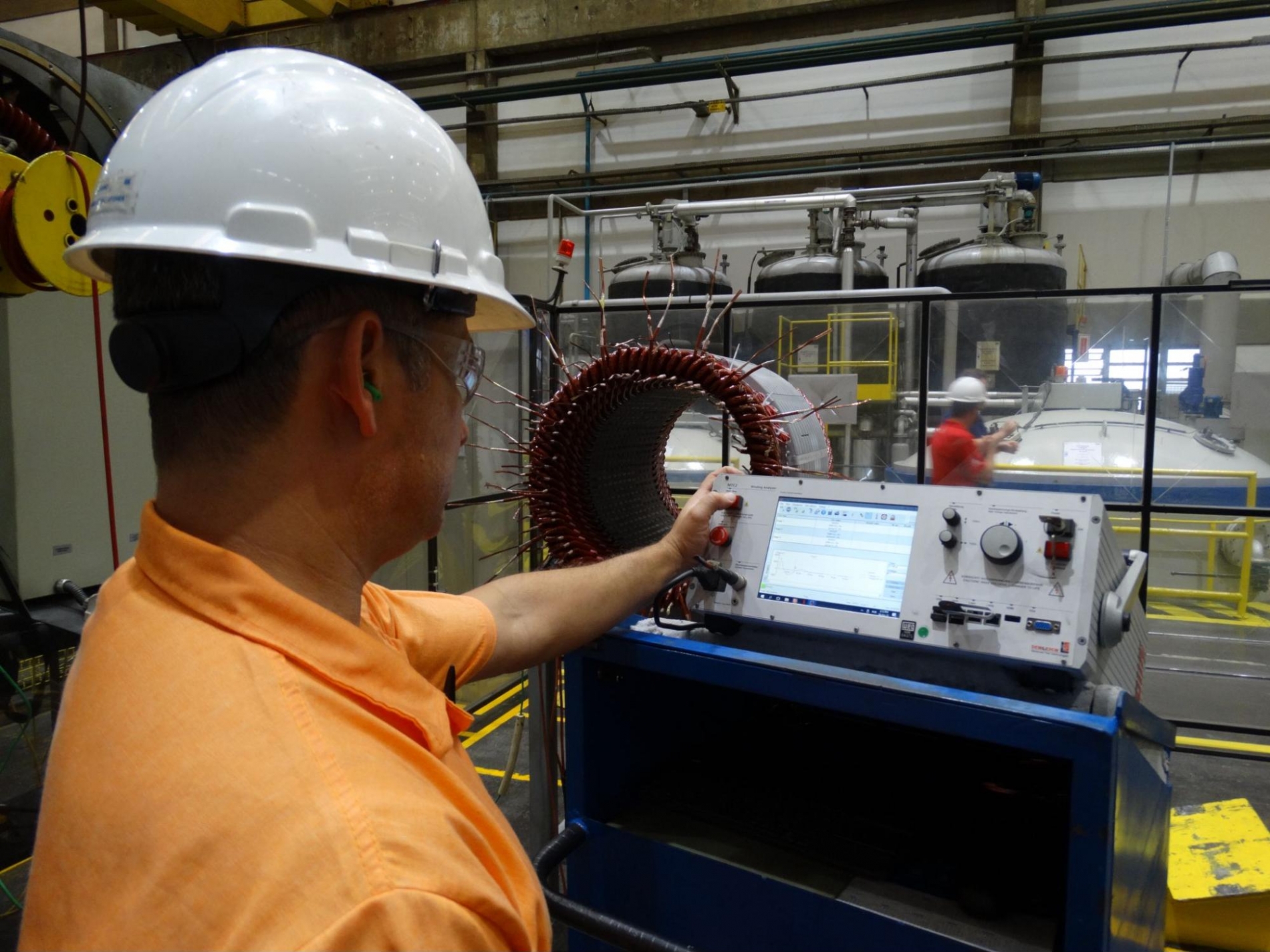
Correct motor sizing starts with application data. The objective is to determine the mechanical output required under real operating conditions and then match that requirement to an appropriate motor specification with a practical service margin.
The first step is to identify the required load torque and operating speed. From there, the required mechanical power can be calculated. Engineers must also account for starting conditions, peak load events, ambient temperature, altitude and any transmission losses through belts, gears or couplings.
In Canadian industrial facilities, sizing accuracy is especially important because motors may operate in demanding environments for long annual run times. Motors used approximately 2,000 to 3,000 hours per year are particularly strong candidates for premium-efficiency models because energy savings compound quickly over time.
Oversizing is often treated as a safety measure, but it can reduce overall system performance. An oversized motor may run below its optimal load point, leading to lower efficiency, poorer power factor and unnecessary extra capital cost. It can also create mismatches with the driven equipment and control system.
An undersized motor is more likely to overheat, stall during startup or fail during transient overloads. Repeated overcurrent conditions accelerate insulation degradation and bearing stress. In severe applications, undersizing can trigger repeated nuisance trips and production interruptions.
Environmental conditions are a core part of industrial motor selection. Dust, moisture, washdown exposure, corrosive atmosphere, ambient temperature and altitude all influence enclosure choice, insulation performance, cooling effectiveness and expected service life.
In Canada, environmental demands can vary significantly by sector and region. Food processing applications may involve washdown requirements. Mining and heavy industrial operations may expose motors to dust, vibration and continuous duty. Outdoor installations may need to handle seasonal temperature swings, moisture ingress and condensation risk.
Dust can impair cooling and damage internal components if the motor enclosure is not appropriate. In these environments, enclosure type matters. A totally enclosed fan cooled configuration is often preferred where airborne particulates are present.
Washdown areas require motors designed for water exposure, corrosion resistance and sealing integrity. Standard general-purpose motors may not be suitable. Moisture ingress can damage winding insulation, bearings and terminal connections.
High ambient temperature reduces cooling margin and can force derating. Low temperatures can affect lubrication, startup behaviour and condensation management. Canadian conditions make this especially relevant for outdoor or unheated installations.
At higher elevations, reduced air density lowers cooling effectiveness. If ventilation is limited, the motor may run hotter even when the electrical load appears acceptable. This must be addressed during specification, not after commissioning.
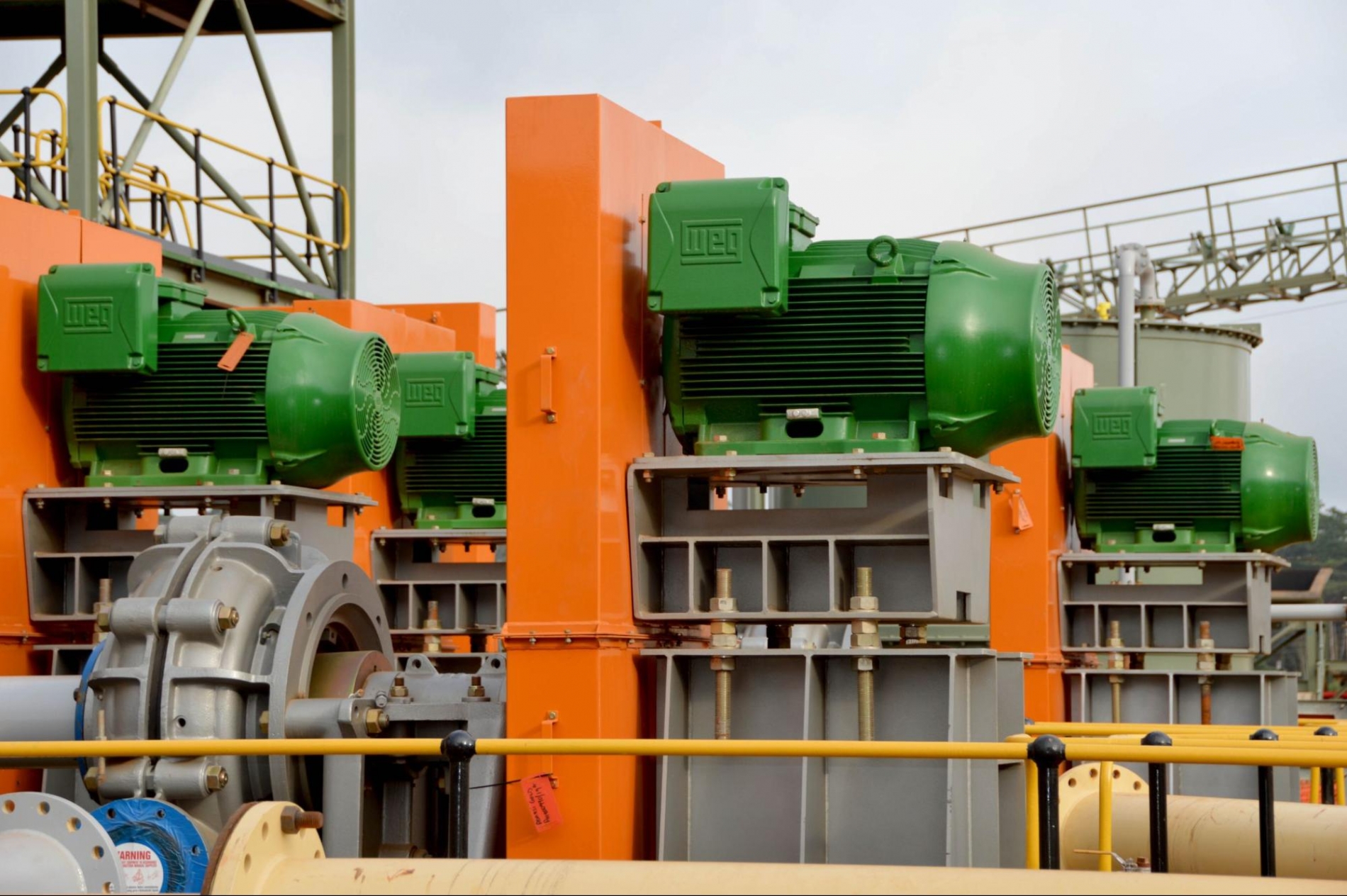
The main motor categories used in industrial applications include AC motors, DC motors and several specialized subtypes such as induction motors, synchronous motors and brushless designs. Selection depends on the required speed control, torque profile, maintenance expectations and system architecture.
AC motors are widely used across Canadian industry because they are durable, well understood and suitable for a broad range of industrial equipment. Within this category, three-phase induction motors are especially common in pumps, fans, conveyors, compressors and manufacturing systems.
For many industrial applications, AC induction motors provide the right balance of reliability, availability, efficiency and cost. When paired with variable frequency drives, they also offer strong control flexibility.
DC motors can provide strong speed control and starting torque, but they typically involve different maintenance and control considerations. In many newer industrial systems, traditional brushed DC motors have been displaced by AC motor and drive combinations or brushless alternatives.
Induction motors remain the standard choice for many general industrial applications. AC induction motors are among the most commonly used motors in Canadian industry, particularly in the 1 to 500 horsepower range.
Their broad adoption is tied to proven reliability, compatibility with industrial power systems and suitability for continuous operation.
Synchronous motors may be selected when precise speed control or power factor correction is important. Other specialized designs may be appropriate in high-performance automation, hazardous locations or compact high-efficiency systems.
The correct decision depends on the application, not on general preference. Motor type must be aligned with the control philosophy, operating profile and maintenance strategy.
Different applications place very different demands on an electric motor. A correct selection for a fan may fail in a loaded conveyor. A suitable motor for a clean indoor mechanical room may perform poorly in a washdown or dusty processing area.
Pumps
Conveyors
HVAC Systems
Compressors / Process Equipment
Pump applications often require attention to flow profile, system head, startup conditions and whether variable flow control is needed. In many cases, pairing the motor with a variable frequency drive improves efficiency and process control.
Conveyors can require high starting torque, stable speed and strong overload tolerance depending on material type and startup conditions. Application details matter. A lightly loaded package conveyor and a heavily loaded bulk handling conveyor should not be treated as equivalent.
HVAC systems often prioritize efficiency, long operating hours and controllability. Fans and blowers frequently benefit from high-efficiency motors and variable speed control because the load varies with demand.
These applications may involve higher inertia, cycling, shock loading or strict process stability requirements. The motor must be evaluated as part of the full system, including controls, driven equipment and environmental exposure.
The content planning notes from VJ Pamensky (WEG Canada) repeatedly emphasize that pumps, conveyors, compressors and HVAC applications each require different selection logic. That is exactly why industrial motor selection should be application-led rather than product-led.
Efficiency is not a secondary consideration. It is a core part of motor selection because electricity cost accumulates over the full operating life of the equipment.
According to Natural Resources Canada, electric motors sold in Canada are subject to energy efficiency regulations designed to remove the least efficient products from the market. NRCan also indicates that higher-efficiency motors can produce meaningful savings for industrial businesses, particularly in high-hour applications.
For engineers and buyers, this has two implications. First, motor selection should account for current compliance requirements. Second, it should consider future-fit decisions where equipment is expected to stay in service for many years.
Premium-efficiency motors are often justified when:
A more efficient motor can also run cooler, which may support longer insulation life and improved reliability. The financial case is not only about power consumption. It also includes reduced maintenance risk and lower downtime exposure.
The most common mistakes are sizing from nameplate assumptions, ignoring duty cycle, overlooking environmental conditions, underestimating starting torque and treating upfront price as the primary decision factor.
Horsepower is important, but it does not tell the full story. Two motors with the same rated power may perform very differently depending on speed, enclosure, thermal class, service factor and starting characteristics.
A motor may appear correct on a specification sheet but fail early because of dust, washdown, heat, cold or poor ventilation. Environmental mismatch is one of the most preventable specification errors.
Modern motor selection often requires coordination with drives, soft starters, overload protection and automation systems. Ignoring the control layer can lead to poor startup behaviour, unstable process control and shortened equipment life.
Lowest purchase price rarely means lowest lifecycle cost. VJ Pamensky’s content strategy correctly highlights that paying more upfront can save thousands in energy, downtime and replacement over the life of the motor.
A failed motor should not automatically be replaced with the same model. The original specification may have been wrong or the process may have changed since the first installation.
A motor should be upgraded or replaced when it no longer aligns with application demands, efficiency goals, reliability expectations or compliance requirements. Failure is only one trigger. Persistent overheating, recurring bearing issues, high energy use, repeated downtime and process instability are also signals. For facilities evaluating whether to repair an existing motor or upgrade to a modern system, comparing DC motor repair versus AC conversion is often a critical next step.
An upgrade is often justified when the application has evolved, production demands have increased or better efficiency levels are available. A replacement review should also consider whether a drive, soft starter, monitoring device or enclosure change would improve the total solution.
Effective electric motor selection is built on application accuracy. Load, speed, torque, duty cycle, environmental exposure, motor type, efficiency level and control compatibility must all be evaluated together. When these factors are aligned, the result is stronger uptime, lower operating cost and better long-term reliability.
For Canadian industrial operations, this is especially important. Federal efficiency requirements, demanding operating environments and rising pressure to improve lifecycle performance all make motor selection a strategic technical decision rather than a commodity purchase. High-performance and energy-efficient solutions begin with the right specification.
Need help selecting or replacing an industrial motor?
Our team can review your application and recommend the right solution based on load, speed, environment, and control requirements.
Electric motor selection is the process of matching a motor’s electrical, mechanical and environmental characteristics to a specific industrial application. It includes evaluating power, speed, torque, duty cycle, enclosure, efficiency and control compatibility.
The right motor is chosen by defining the load profile, torque requirement, operating speed, duty cycle, environment and available power supply. The motor must then be matched to the application’s performance and reliability requirements.
Motor sizing refers mainly to determining the required power and torque. Motor selection is broader. It includes sizing, but also covers enclosure type, efficiency level, starting method, environmental protection and system integration.
A motor should not be oversized by default. Limited-service margin may be appropriate for overload events or future process variation, but excessive oversizing can reduce efficiency and power factor while increasing cost.
Alternating current induction motors are among the most commonly used motors in the Canadian industry. They are widely applied across pumps, fans, conveyors, compressors and manufacturing systems.
Environmental conditions influence enclosure choice, cooling, insulation life, corrosion resistance and maintenance interval. Dust, moisture, washdown exposure, temperature extremes and altitude must all be considered.
A premium-efficiency motor is often justified when the motor runs for long hours, electricity cost is significant, reliability is critical or the operation is targeting lower lifecycle cost and stronger energy performance.
No. A failed motor should trigger a review of the application. Load conditions, environment, control method and operating profile may have changed or the original motor may have been incorrectly specified.
Reviewed by: Michael Ishlove, Technical Manager
Last reviewed: May 2026