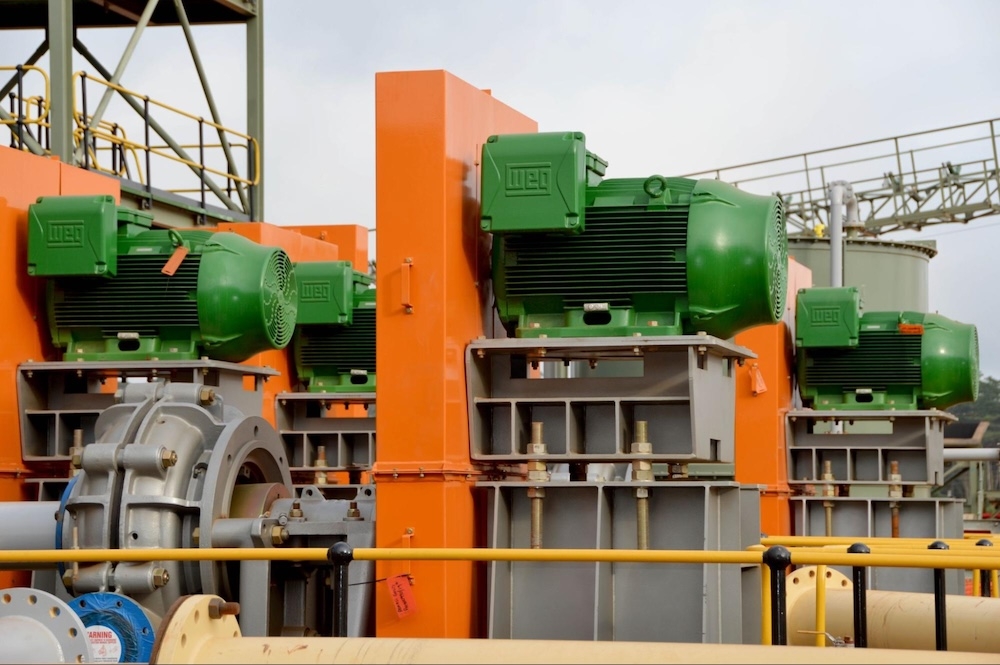
In plant design meetings, engineers still default to squirrel cage induction motors (SCIM) for most rotating equipment, even as variable frequency drives (VFDs) have become the norm. At VJ Pamensky (WEG Canada), we see the same pattern across industrial motor systems: when teams want predictable uptime, straightforward maintenance and scalable speed control, brushless motors in the SCIM family remain the safest “standard choice” in the VFD era.
Below is an engineer-to-engineer look at why SCIMs stayed on top, what changed when VFDs matured and what reliability-focused maintenance looks like when you pair modern drives with classic induction machines.
SCIMs are not “new tech made viable by drives,” they’re a long-established, brushless AC motor architecture that earned trust by being simple, rugged and repeatable at scale. Historically, the “catch” for AC induction was speed control: line frequency largely fixed speed, so process control often meant mechanical solutions (gearboxes, dampers, throttling valves) or choosing DC machines where speed control was easier.
The VFD era didn’t invent SCIM reliability, it unlocked controllability that used to be a key advantage of DC.
DC motors can be excellent machines, especially where high dynamic response is critical. But in many industrial environments, their traditional strengths became less decisive as AC drives improved, while their practical drawbacks remained.
Many DC motor designs rely on brush/commutator systems that require inspection, seating, cleaning and eventual replacement. That’s not a deal-breaker, but it adds planned maintenance overhead and a failure mode that SCIMs simply don’t have.
In dirty, humid or abrasive environments (or where uptime targets are aggressive), eliminating brush gear reduces variables. SCIMs keep the rotor electrically “passive,” which contributes to their reputation as low-drama workhorses.
High-performance control methods (notably vector control) made it practical for induction motors to achieve torque control capabilities that historically pushed engineers toward DC drives. In other words, many applications that once needed DC for controllability could now use SCIM + VFD.
When you pair a SCIM with a properly selected VFD, you’re combining:
This combo is why SCIMs remain dominant in electric motors used for continuous-duty industrial service.
VFD value is often less about “the motor got more efficient” and more about the system stopped wasting energy.
For variable torque loads like fans and centrifugal pumps, small speed reductions can produce large power reductions (affinity-law behavior), as power closely follows the load curve. A commonly cited rule of thumb is that power varies roughly with the cube of speed, so even modest turndown can save meaningful energy.
That matters directly to sustainability goals: reducing wasted energy is frequently the fastest path to lower kWh, lower heat load and lower lifecycle emissions without changing the process outcome.
VFDs also give engineers:
For many facilities, this makes variable frequency drives a process tool, not just a motor accessory.
Engineers keep choosing SCIMs because they are easier to engineer around.
SCIMs cover a massive range of power levels and mechanical formats, so you can standardize:
Regulatory and market pressure continues to push higher efficiency classes (NEMA Premium).
SCIMs remain the common denominator across industrial motor systems, especially where the load profile is understood and the priority is uptime:
Here’s the trade engineers have to manage:
PWM inverter outputs can create steep voltage rise times and reflection, especially with long supply cables. This is why “inverter-duty” guidance and insulation requirements matter for VFD-fed applications.
Bearing damage risk can increase with modern drives due to common-mode voltage and high-frequency switching effects, which can lead to discharge through bearings over time if not mitigated.
Typical mitigation options include:
VFD systems can trigger concerns around harmonics, overheating and electromagnetic interference if not engineered correctly, especially when retrofitting into older switchgear and grounding schemes.
SCIMs are often described as “low maintenance,” but in high-duty environments that really means: maintenance is simpler, not optional.
A reliability-minded program for SCIM + VFD installations usually includes:
When SCIM is the default, the real engineering is in the details. A quick checklist that prevents most avoidable pain:
Do that consistently and SCIM + VFD stays boring in the best possible way.
SCIMs remain the industrial default because they’re rugged, standardized and scalable, while modern VFDs deliver the controllability and system-level efficiency engineers used to chase with more complex motor technologies. When the installation and maintenance details are handled with the same care as the equipment selection, the result is predictable performance, easier reliability planning and fewer surprise stoppages.
Contact VJ Pamensky today to learn how we can help you align motor selection, drive strategy and maintenance practices to your plant’s uptime goals.
Yes. SCIMs don’t use brushes or a commutator. Rotor current is induced electromagnetically, which is a big reason they’re widely viewed as rugged, low-maintenance brushless motors for industrial duty.
Because SCIMs combine durability, broad availability and straightforward standardization. When paired with variable frequency drives, they give engineers practical speed control without adding brush maintenance or uncommon spare parts into industrial motor systems.
Not always, but you should evaluate it. Key drivers include supply voltage, motor lead length, switching behavior (dv/dt), duty cycle and how often the motor runs at low speed. In many engineered systems, insulation stress and reflections at the motor terminals are what push a spec toward inverter-duty considerations.
Two frequent ones are (1) bearing currents/shaft voltage risks and (2) insulation stress from fast switching. The fix is usually a combination of grounding practices and the right mitigation (filters, chokes, shaft grounding or insulated bearings), selected to match the installation.
Often by improving system efficiency. For variable torque loads, reducing speed typically reduces power draw significantly, so the process can hit its flow/pressure target with less wasted energy than throttling or bypass control. That’s a major lever for motor efficiency goals.
Many of the “everyday industrial” loads: conveyors, centrifugal pumps, compressors (application-dependent), packaging equipment and automation lines, especially where predictable performance and uptime matter more than exotic torque density.
Treat cabling and grounding as part of the design, not as install details. Cable type, routing, bonding and lead length have an outsized impact on EMI, reflections and long-term reliability in VFD-driven industrial motor systems.